Feature
Skip Tracing
Skip tracing helps investors move from identifying a property to actually trying to reach the owner. In JPS, the best use of skip tracing is not blasting every record. It is pairing owner contact research with a tighter list-building workflow so the outreach queue is smaller, better prioritized, and easier to work.
7 days free, then $39/mo • Love it or cancel in 2 clicks. No calls.
Definition
Skip tracing is the process of finding updated contact information for a property owner or decision-maker after a property has already been identified as worth researching.
For investors, skip tracing is usually most effective when it comes after filtering and prioritization. The more disciplined the list before skip tracing, the more useful the outreach process becomes.
How It Works
- Build a list of properties that actually match your strategy.
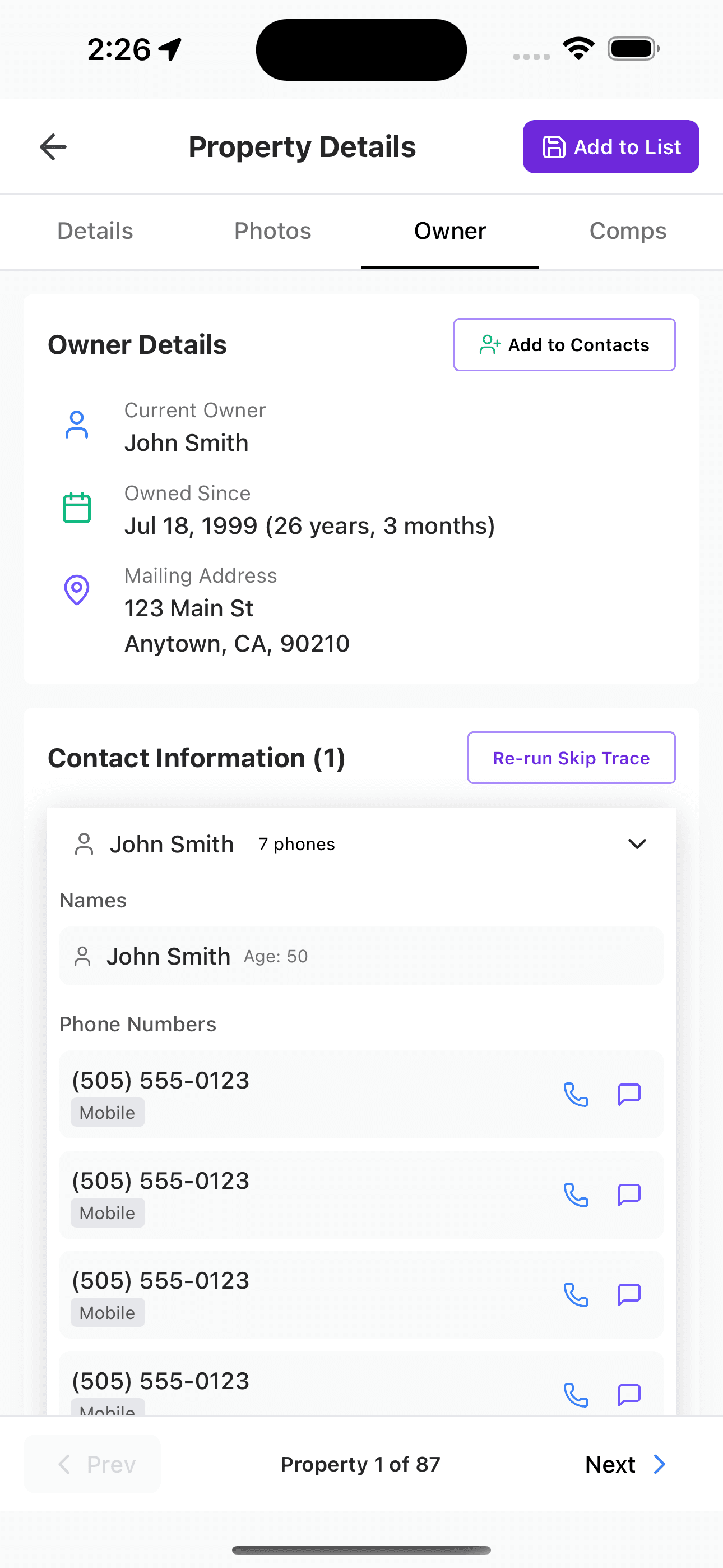
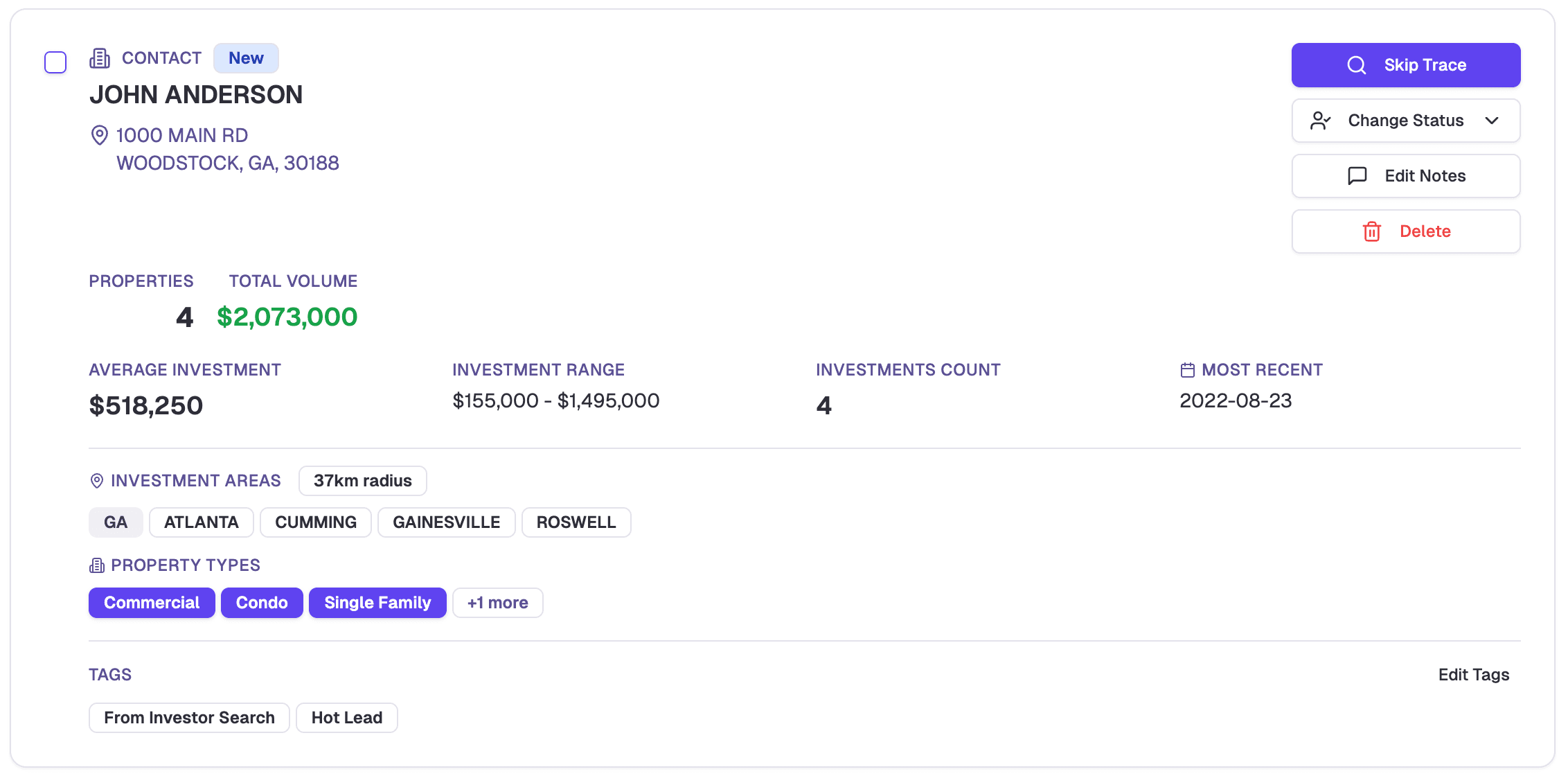
- Use skip tracing to enrich those records with owner contact details.
- Review the list before outreach so your team focuses on the strongest records first.
- Move the validated contacts into calling, texting, mail, or CRM follow-up.
This workflow is usually stronger than buying contact data first and trying to decide what matters later.
When to Use It
- When you already have a filtered property list and need owner outreach data
- When you want a cleaner follow-up queue for direct-to-seller campaigns
- When you are working preforeclosure, absentee-owner, vacant, or off-market workflows
- When you want to connect list building and contact research in one place
Workflow or Example
A wholesaler might first narrow to high-equity absentee-owned single-family homes in a small set of neighborhoods, then run skip tracing only on the strongest records. That is usually a better use of time and budget than enriching a broad list that still has weak strategic fit.
The real edge is list quality before contact quality.
Pros
- • Connects research to outreach faster
- • Works well after targeted filtering and list building
- • Supports seller outreach workflows without leaving the platform
- • Can improve team focus by keeping the contact queue tied to strategy
Cons
- • Weak lists still produce weak outreach even with better contact data
- • Not every owner record will be reachable or current
- • Response quality still depends on timing and message quality
Risks
- • Teams can overspend or overreach if they enrich broad low-fit lists
- • Contact data should be handled responsibly and in line with outreach rules
- • Ownership context still matters before assuming who should be contacted
Step-by-Step Workflow
Step 1
Build the right list first
Use investor filters and workflow logic before enriching records with contact data.
Step 2
Enrich the top tier
Run skip tracing on the records that most clearly match your acquisition strategy.
Step 3
Review before outreach
Make sure the contact workflow matches the property, ownership, and timing context.
Step 4
Push into follow-up
Move the best records into calls, mail, or CRM tasks instead of leaving them as static research.
Screenshots
Frequently Asked Questions
When should I use skip tracing?
Usually after you have already narrowed to a list of properties that match your strategy, not before.
Does skip tracing guarantee I can reach the owner?
No. It improves the outreach workflow, but contactability and response still vary.
Is skip tracing useful for off-market workflows?
Yes. It is often one of the steps that connects property discovery to actual seller outreach.
Related Pages
Feature
Preforeclosure Search
Use JustPropertySearch preforeclosure search to find early distress signals, layer filters like equity and ownership, and prioritize investor outreach more effectively.
Feature
Live Lists
Use JustPropertySearch Live Lists to monitor one or multiple target locations, automatically refresh matching properties, and get notified when new opportunities appear.
Guide
How to Find Off-Market Properties
Learn how investors use JustPropertySearch to find off-market properties by combining filters, preforeclosure research, virtual driving for dollars, and ongoing list monitoring.
Ready to put this to work?
Start a free trial and run it on your own markets in minutes.
7 days free, then $39/mo • Love it or cancel in 2 clicks. No calls.